Last Updated on October 6, 2026 by Johnny Peter
Newborns have an appetite – eating 8 to 12 times daily. Feeds may take around 20-30 minutes each time. That really mounts up to hours spent sitting in just one spot, so your seat choice is very important indeed. Many parents often leave choosing a chair till last – and end up spending far more time sitting there than anywhere else. Many families choose a glider nursing chair because it slides back and forth on a smooth track. Your arms stay free. Your baby stays calm. A good chair has some common characteristics. Know what they are before buying one – then you’ll probably get a chair that really suits your body, your space, and those long nights.
What features make a glider nursing chair comfortable?
Four things matter most – back support, arm width, seat depth, and a quiet glide. Here’s what really counts.
• Back: high enough for your head to rest if you recline.
• Arms: quite broad and very cushioned – this lets a pillow and your elbows all find room.
• Seat: deep enough so your back really makes contact with the chair itself whilst your knees bend just over the edge.
• Glide: very smooth and nearly silent – this way a dozing infant actually remains fast asleep.
• Frame: constructed from solid wood or metal – it will remain perfectly still whenever you get up.
Test any chair for ten minutes, not two.
Why does the glide motion help at feeding time?
Gentle motion really settles most babies – and a glider gives you all that movement with very little work involved. Newborns sleep 14-17 hours every day according to the National Sleep Foundation. Loads of those snoozes begin just moments after feeding time. A smooth glide actually helps a little one drift off when the bottle or breast is finished. And it works for you too! A slow glide provides your whole body with some much-needed rest at 3 am.
A glider also glides along a straight rail rather than on curved feet. This usually results in it requiring even less space behind it than a rocker. When set up in a small nursery, that’s definitely an advantage.
Is a recline worth it on a glider nursing chair?
Yes, if the chair has room for it. A recline lets you lean back during long feeds and gives you a good angle for bottles. Swivel is a bonus. In a tight room, you can turn toward the crib, the door, or the lamp without standing up. Many gliders also have a lock. Lock it for a still seat during a quick burp. Little features like these save you effort ten times a day. That is why I rank them above color.
Which fabric works best on a glider nursing chair?
Choose a performance fabric that will easily wipe clean. Actually about half of all babies under three months have very frequent spit-ups – hence easy cleaning is absolutely essential! Also, take a look at the rub count itself. Fabrics with ratings over 15,000 double rubs will do quite well for daily household use.
| Feature | What to look for | Why it helps |
|---|---|---|
| Fabric | 15,000+ double rubs | Lasts through daily use |
| Cover | Removable and washable | Quick cleanup |
| Cushion | Firm foam that bounces back | Holds its shape |
| Footrest | Matching ottoman | Takes weight off your lower back |
Where should you put a glider nursing chair?
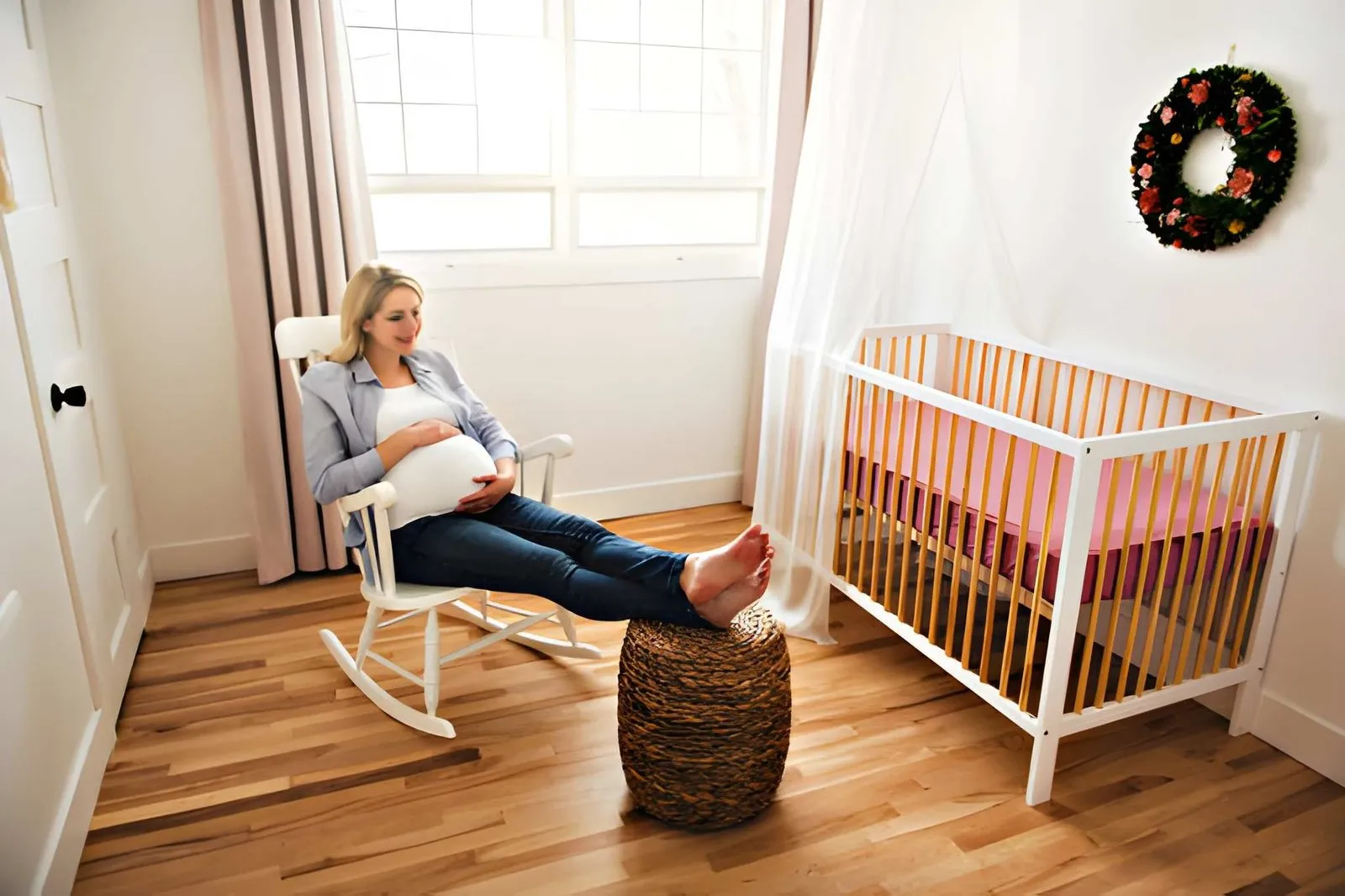
Place it very close to the crib – near an electrical outlet – and have a tiny end table within easy access. Be mindful of its dimensions indeed. The chair really needs to accommodate you, plus a pillow, and there ought to be some extra room for clearance over the crib itself.
Make use of a rather warm, softly lit lamp. Harvard Health suggests that blue light actually delays production of our sleep hormone melatonin about double the time that green light takes, so reserve those brighter, cooler bulbs more for daytime hours. Once feeding time has concluded, carefully set your little one down onto a completely flat, quite firm crib mattress. That’s considered the most secure location for sleep by the American Academy of Pediatrics anyway.