Last Updated on September 23, 2026 by Johnny Peter
A garden hose gets grime wet. It does not get it off. Dirt sits in the pores of concrete and wood and just laughs at a slow trickle of water. A High Pressure Washer does something a hose never can, it turns water into a tool sharp enough to strip years of grime in one pass. A regular hose runs at around 50 PSI. A home pressure washer runs anywhere from 1,400 to 4,000 PSI. That gap is the whole reason one machine cleans a driveway in ten minutes while the other takes an hour and still leaves it patchy.
What PSI And GPM Actually Mean
PSI stands for pounds per square inch, and it tells you how hard the water hits the surface. GPM stands for gallons per minute, and it tells you how much water is coming out. Multiply the two together and you get the real cleaning power of a machine. A hose running 50 PSI and 5 GPM only scores 250. A mid range pressure washer clears that number many times over, which is why it strips dirt a hose just cannot touch.
Yes, It Actually Saves Water Too
Most people assume a high pressure machine must drink more water than a hose. It is the opposite, and the numbers back that up clearly.
| Cleaning Task | Garden Hose | Pressure Washer |
|---|---|---|
| Water flow rate | Around 8.5 gallons per minute | Around 1.5 to 4 gallons per minute |
| Cleaning patio furniture | 100 litres, 5 minutes | 20 litres, 2.5 minutes |
| Water pressure | 40 to 60 PSI | 1,400 to 4,000 PSI |
| Typical water saving | Baseline | Up to 80 percent less |
A narrow nozzle forces the water out fast, and speed does the work that volume used to do. Less water, more force, faster job.
What A High Pressure Washer Is Actually Good For
- Driveways and paths caked in years of built up dirt
- Timber decks that have gone grey and slippery
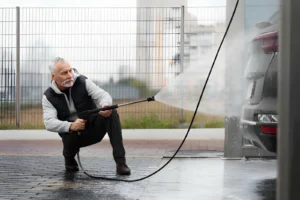
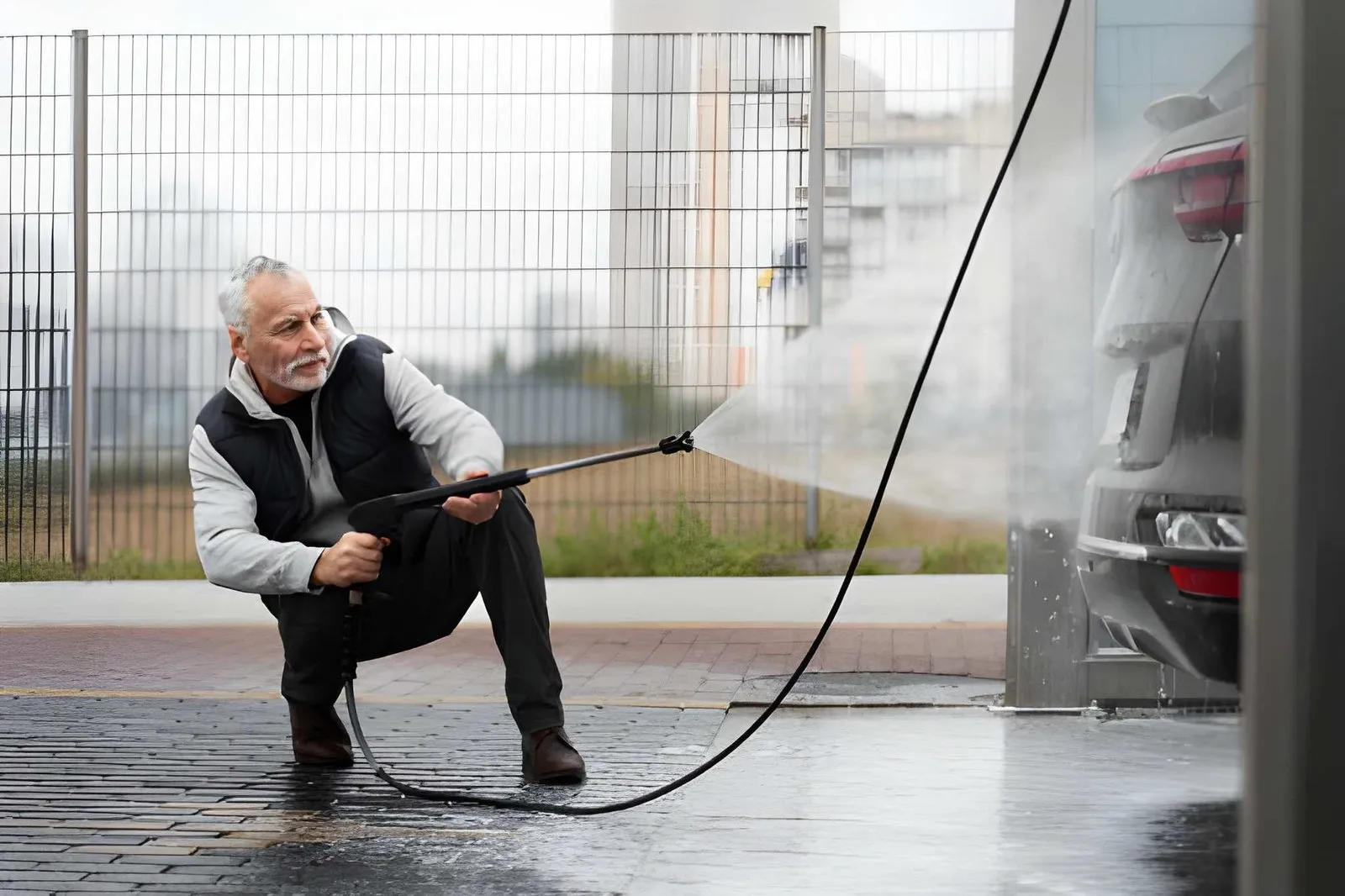
- Car and boat exteriors, using a lower pressure nozzle
- Fences, brick walls, and rendered surfaces
- Outdoor furniture before the first warm weekend of the season
- Gutters, when fitted with the right attachment
Features Worth Checking Before You Buy
Not every pressure washer suits every job, and the spec sheet tells you more than the price tag does. A higher PSI rating suits tough jobs like oil stains on concrete. A higher GPM rating suits large open areas that need covering fast. Electric models are quieter and lighter, which suits home use around neighbours. Petrol models carry more raw power for trade and commercial jobs, at the cost of extra noise and weight. Always check the hose length too, since a short hose turns a simple job into a frustrating one.
A Word On Technique
Holding the nozzle too close to a soft surface, like old timber or painted render, can gouge the material rather than clean it. Start further back than feels necessary and move closer only if the dirt is not lifting. That single habit prevents most of the damage people blame on the machine itself, when the real issue was always technique. A wide fan nozzle spreads the force over a bigger area and suits most household jobs, while a narrow turbo nozzle should be saved for the toughest, most stubborn stains only.
How Much Time It Actually Saves
A driveway that takes an hour of hard scrubbing by hand can often be done in fifteen minutes with the right nozzle and a steady sweep. That saving adds up fast across a whole property, from paths to fences to the garage floor.