Last Updated on January 17, 2026 by Johnny Peter
Planning lunch is often treated as a practical task squeezed between work, errands, and daily obligations. When dietary rules are involved, however, that midday decision can become disproportionately complex. Conversations around lunch ideas for carnivore diet tend to surface not because lunch itself is uniquely difficult, but because strict eating frameworks amplify the everyday pressures of time, cost, and social expectations. Lunch becomes the point where theoretical diet rules meet real-world constraints.
Why Lunch Creates More Friction Than Other Meals
Breakfast and dinner usually come with more structure. Breakfast is often repetitive, while dinner allows for planning, cooking time, and shared routines. Lunch sits in between, shaped by work schedules, school breaks, commuting, and limited food access. When a diet narrows acceptable food choices, that lack of flexibility becomes more noticeable at midday.
Many strict diets assume consistent access to specific foods, storage, or reheating options. In reality, lunch is frequently eaten away from home, making adherence more logistically challenging than the diet descriptions suggest.
Structure Versus Daily Unpredictability
Clear dietary rules can reduce decision fatigue by removing ambiguity. Knowing exactly what fits within a framework can feel mentally freeing. At lunch, however, unpredictability often overrides structure. Meetings run late, plans change, or food options are limited by location rather than preference.
This is why lunch is often where people begin adjusting rules, not out of disregard, but out of necessity. The conflict highlights how rigid systems interact with environments that do not accommodate precision.
Cost Pressures and Repetition
Budget considerations shape lunch decisions more than any other meal. Many affordable lunch staples rely on grains, legumes, or produce that fall outside stricter diet definitions. Removing these options can push people toward more expensive or repetitive meals.
Over time, cost pressure often leads to simplified lunches built around the same ingredients. While repetition can support consistency, it can also reduce enjoyment and satisfaction, making long-term adherence more difficult than idealized examples imply.
Social Dynamics Around Midday Eating
Lunch is commonly a social activity, especially in workplaces. Eating with colleagues or friends introduces an element of visibility that strict diets do not always account for. Special meals can invite questions or create subtle separation from group norms.
Some people respond by consistently bringing food from home, while others become more flexible in social settings. These adaptations reflect how eating patterns are shaped as much by social comfort as by dietary intent.
Satiety and Meal Experience
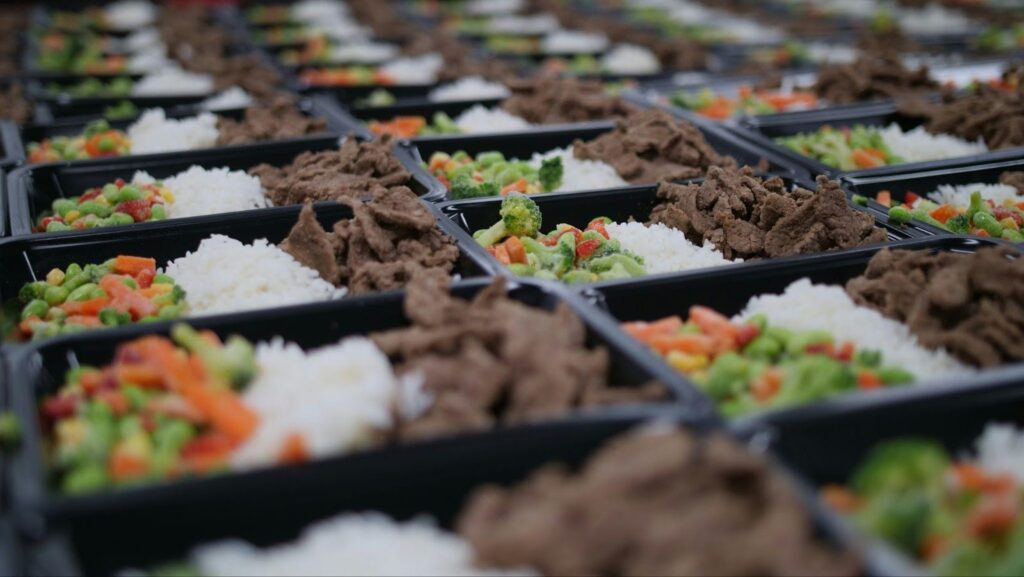
Restrictive lunch options can also change how filling a meal feels. Many traditional lunch foods contribute volume and texture that influence satiety. Removing entire food groups alters not just nutrition, but the sensory experience of eating.
Organizations such as the National Institutes of Health emphasize that overall dietary patterns matter more than individual meals in isolation. This broader perspective contrasts with highly prescriptive lunch planning and helps explain why some people reassess rigidity over time.
Adaptation as a Practical Response
Most people do not follow strict diets exactly as described indefinitely. Instead, they adapt. Lunch is often the first place this happens, because it carries the highest practical burden. Adjustments might involve timing, portions, or food combinations rather than abandoning the framework entirely.
These changes are rarely discussed in polished diet narratives, yet they are central to how eating patterns actually persist in daily life.
The Difference Between Examples and Experience
Online meal examples tend to present clean, controlled scenarios that overlook variables like work environments, cultural norms, or access to facilities. What looks simple on a screen may require disproportionate effort in practice.
Recognizing this gap clarifies why lunch planning feels harder under strict rules. The challenge is not just compliance, but compatibility with everyday living.
Lunch as the Stress Test of Dietary Rules
Lunch consistently exposes the tension between structured eating and real-world conditions. It is the meal most influenced by time pressure, social context, and financial limits. As a result, it becomes the moment where diet rules are most frequently tested, adjusted, or quietly reinterpreted.
Understanding this dynamic offers a more realistic view of how strict diets function outside idealized settings, revealing lunch not as a failure point, but as a reflection of how people adapt theory to life.